Walking into a baking supply shop can make every tool look essential. Colourful moulds, powerful mixers, and matching accessory sets promise impressive results, but a beginner can make plenty of delicious treats with a modest collection.
Start with tools that help you measure accurately, mix ingredients, and bake the recipes you enjoy. As your skills develop, your habits will show you which additions are worth buying.
1. Start with Recipes, Then Build Your Toolkit
Choose a few recipes before making a shopping list. Cookies, muffins, and banana bread are useful starting points because they introduce basic techniques without requiring elaborate equipment.
Read each recipe from beginning to end. Note the pan dimensions, mixing method, and any special equipment.
Then check your cupboards. You may already own suitable bowls, measuring spoons, and oven gloves. Buying around specific recipes keeps your collection useful and manageable.
2. Put a Digital Scale Near the Top of Your List
Accurate measurements help make baking results more consistent. A digital scale is particularly useful for flour, which can vary considerably in weight depending on how it is scooped into a cup. Use the weights supplied in your recipe whenever available.
Look for a scale with gram measurements, a clear display, and a tare function. Tare lets you reset the reading after adding a bowl or an ingredient.
One reliable kitchen scale is enough to begin with. Keep measuring spoons for small quantities that your scale cannot measure reliably.
3. Choose One or Two Pans You Will Actually Use
Your first pan should suit your first recipes. A baking sheet is useful for cookies, a loaf pan suits many quick breads, and a square pan works for brownies and tray bakes.
Check the recipe’s exact dimensions before purchasing. Different pan sizes change the depth of the mixture and may require adjustments to baking time.
Material matters too. Light-coloured metal is a practical choice for many beginner recipes, while glass, ceramic, dark metal, and silicone can produce different results. Follow the recipe’s pan guidance where provided.
Avoid buying several similar moulds simply because they come in a set.
4. Understand the Role of a Balloon Whisk
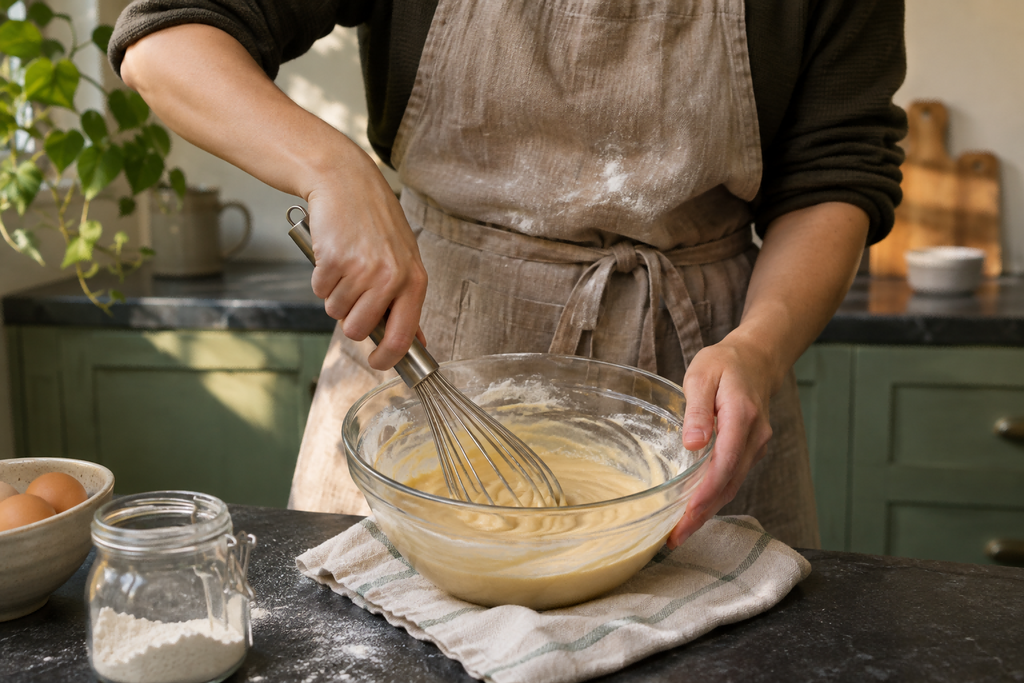
A balloon whisk helps blend eggs, combine liquids, and distribute dry ingredients. It works well for many mixtures made with oil or melted butter.
Choose one with a comfortable handle and wires that feel sturdy. A medium-sized whisk usually covers everyday tasks without taking up much storage space.
For thick cookie dough, switch to a sturdy spoon or suitable spatula. A whisk can become clogged and difficult to use.
One versatile whisk is a sensible starting point; specialist shapes can wait until a recipe gives you a reason to buy them.
5. Buy an Electric Hand Mixer When Your Recipes Need It
An electric hand mixer is useful for whipping cream, beating egg whites, and creaming softened butter with sugar. It reduces the effort involved in sustained mixing.
Before buying, consider the recipes you plan to repeat. If you mainly make hand-mixed muffins, brownies, and quick breads, you may not need one immediately.
Look for a comfortable weight, secure attachments, and controllable speeds. Check the manufacturer’s limits before using it with heavy mixtures.
A stand mixer can wait until your baking frequency and preferred recipes justify its cost and storage needs.
6. Make a Flexible Spatula an Everyday Essential
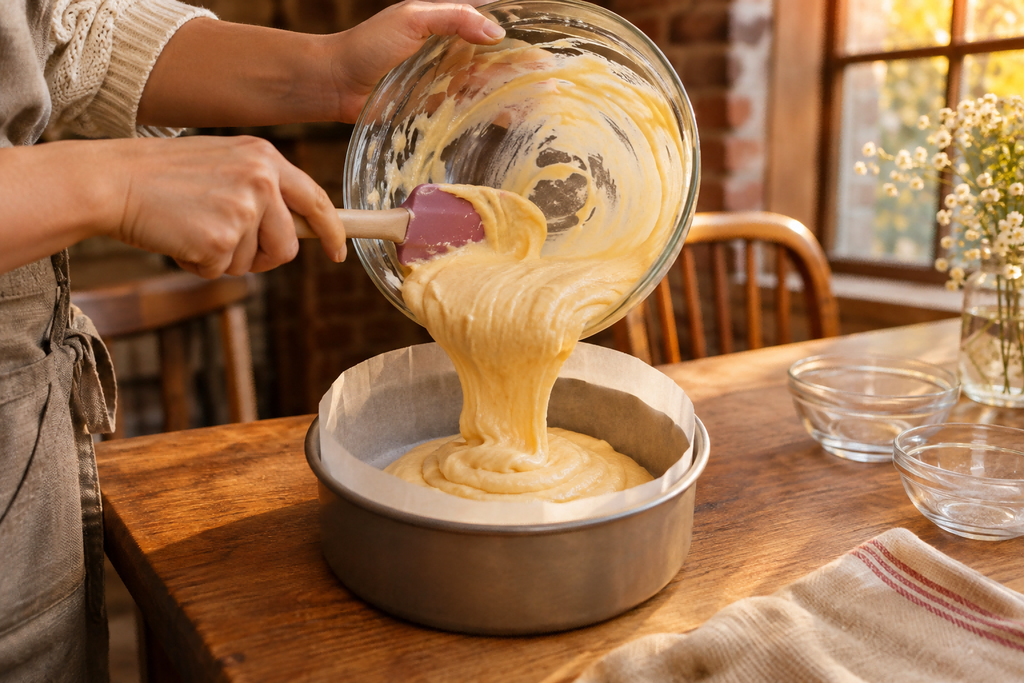
A flexible spatula scrapes batter from bowls, folds mixtures together, and helps transfer ingredients into pans.
Choose a medium-sized silicone spatula with a flexible edge and a supportive core. It should bend enough to follow the bowl while remaining firm enough to mix ordinary batter.
A one-piece design can simplify cleaning. Check its temperature rating before using it with hot ingredients.
An offset spatula has a different job: spreading batter and smoothing frosting. Add one if you begin decorating cakes regularly.
7. Keep Mixing Bowls Simple
Two bowls—one medium and one large—will handle many beginner recipes. The larger bowl should leave enough room to stir without spilling.
Stainless steel bowls are lightweight, while glass bowls let you see the mixture through the sides. Choose what feels comfortable and fits your kitchen.
Existing bowls may work perfectly well. Before buying a large nesting set, ask whether you will use the different sizes.
If you plan to use an electric mixer, choose bowls suitable for that purpose and deep enough to help contain splashes.
8. Add Small Tools That Support the Process
A few supporting items help you work more comfortably:
| Item | Main use | Buying advice |
|---|---|---|
| Measuring spoons | Small amounts of ingredients | Start with one clearly marked set |
| Baking parchment | Lining pans when directed | Choose a size suitable for your trays |
| Cooling rack | Letting air circulate beneath baked goods | Start with one that fits your baking space |
| Oven gloves | Handling hot pans | Prioritise a secure grip and comfortable fit |
| Timer | Tracking baking and resting periods | Use your phone or existing kitchen timer |
Check what you already own before adding these to your basket.
9. Avoid Purchases That Repeat the Same Job
Large starter sets can include useful pieces alongside tools you rarely touch. Compare the contents with your actual recipes before deciding whether the bundle offers value.
For each purchase, ask:
- Which recipe will I use this for?
- Can an existing tool do the job comfortably?
- Will I use it often enough to store and clean it?
- Does it fit my oven, cupboards, and work surface?
Specialty moulds, extensive piping sets, cake turntables, and multiple scraper shapes can wait. Buy them when a particular baking interest becomes a regular habit.
10. Frequently Asked Questions
What should I buy first on a limited budget?
Prioritise a digital scale, the pan required by your chosen recipe, a whisk, and a flexible spatula. Reuse suitable bowls and other kitchen basics.
Do I need matching tools?
No. Comfortable, reliable tools matter more than a coordinated appearance.
Should I buy several identical pans?
Only when your recipes or baking routine require them, such as making multiple cake layers.
Can a silicone spatula replace every mixing tool?
It handles many tasks, but a whisk blends lighter mixtures more efficiently, while a sturdy spoon may be easier for stiff dough.
When is an upgrade worthwhile?
Upgrade when a tool is damaged, unreliable, uncomfortable, or regularly limits what you want to bake.