Butter gives shortbread its familiar aroma. Vegetable oil helps many cakes stay soft. Whipped cream adds lightness to fillings and, in some recipes, to cake batter itself.
Although all three contain fat, their composition and behaviour are different. Understanding those differences helps explain how they influence flavour, tenderness, and structure—and why replacing one with another can change the result.
1. Understand That Fat Does More Than Add Richness
Fat contributes to tenderness by limiting the development of a strong flour-and-water network. It also affects how a baked product feels in the mouth and carries flavour.
However, the result depends on more than the amount of fat. Its physical state, accompanying water, and the mixing method all matter.
Solid butter can hold air during creaming. Liquid oil behaves differently, while cream combines milk fat with a substantial amount of water. A recipe balances these characteristics with its other ingredients.
2. Compare Their Composition
The following figures are useful approximations; check the product label because composition and naming vary.
| Ingredient | Typical fat content | Main characteristics |
|---|---|---|
| Butter | Around 80–82% | Contains water and milk solids; firms when cool |
| Standard liquid vegetable oil | Almost 100% | Little or no water; usually stays liquid at room temperature |
| Dairy whipping or heavy cream | Around 30–40%, depending on type | Contains milk fat and substantial water; suitable varieties can be whipped |
Here, “cream” means unsweetened dairy cream suitable for whipping. Light cooking creams and plant-based whipping products may behave differently.
3. Choose Butter When Its Flavour Matters
Butter contributes a distinctive dairy aroma that is especially noticeable in shortbread, butter cookies, pound cake, and pastry.
Its milk solids can develop toasted flavours when browned. Brown butter, however, has lost some water during cooking, so it is best used in a recipe that accounts for that change.
Butter also affects texture as it cools and firms. A butter-based cake may feel firmer when refrigerated than it does at room temperature.
Choose butter when the recipe relies on its flavour, physical structure, or both.
4. Follow the Required Butter Temperature
Cold, softened, and melted butter perform different jobs.
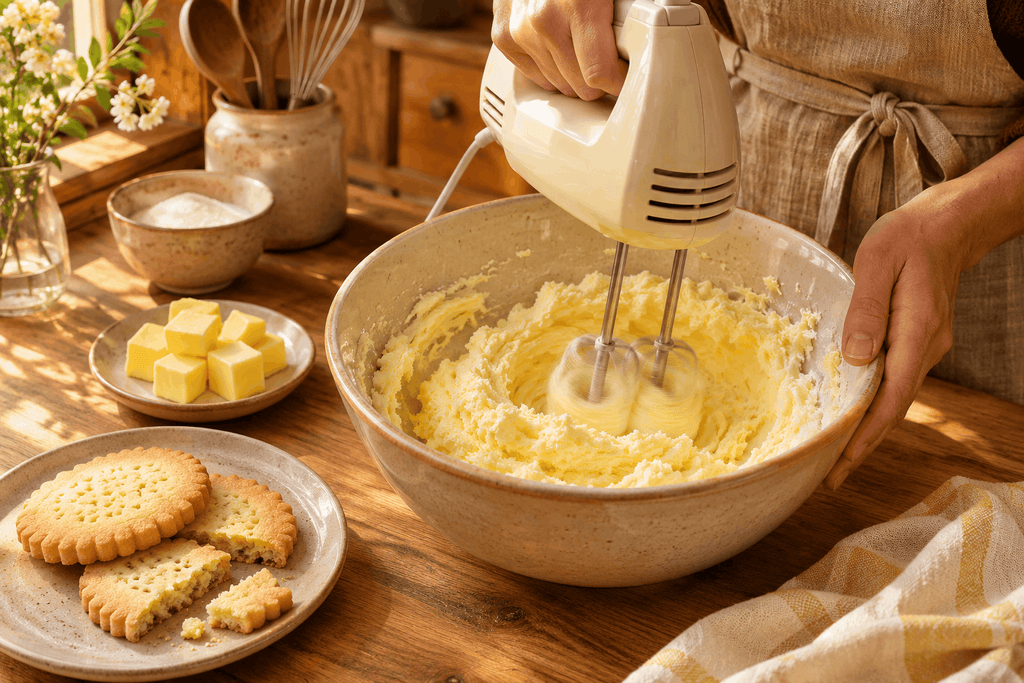
Cold butter can remain in pieces or layers within pastry dough. Softened butter can be creamed with sugar to incorporate small air bubbles. Melted butter mixes differently and cannot perform the same creaming function.
For creaming, aim for the consistency described in the recipe: pliable enough to mix, while still holding its shape. Butter that is oily or partly melted may not trap air effectively.
Follow visual cues as well as mixing times, since room temperature and equipment vary.
5. Use Liquid Oil for Softness and Easy Mixing
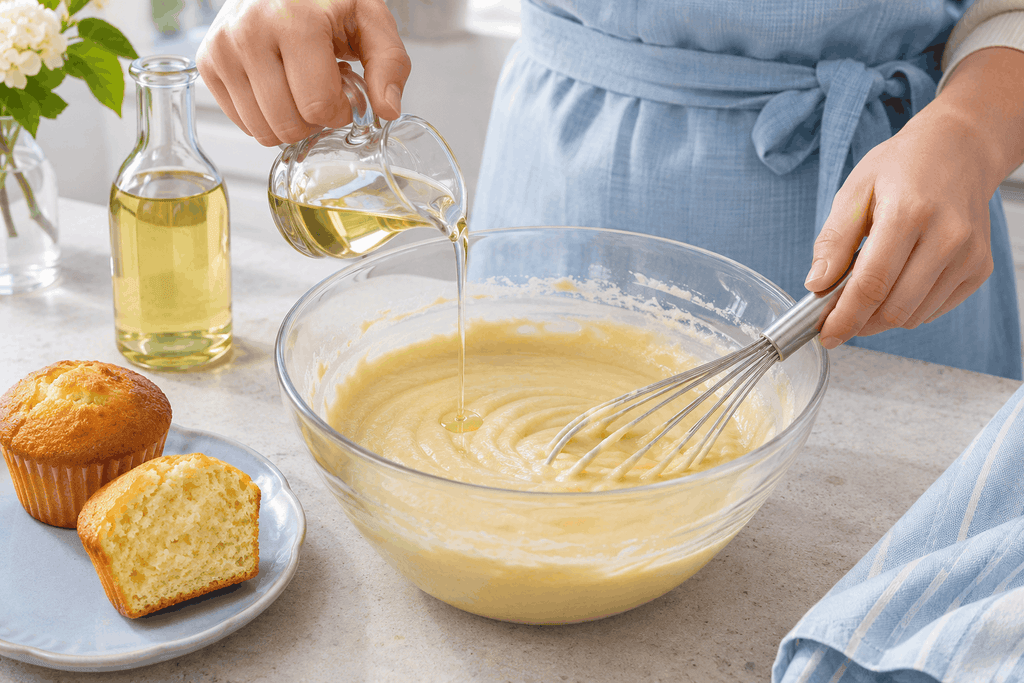
Neutral liquid oils, such as suitable refined sunflower or canola oil, contribute fat without a strong dairy flavour. They are common in muffins, carrot cakes, chiffon cakes, and many chocolate cakes.
Because these oils remain liquid when cool, they often help the finished crumb feel softer, including after refrigeration.
That sensation is sometimes described as “moist,” but oil itself does not add water. It changes tenderness and mouthfeel.
Oil cannot trap air through butter-and-sugar creaming, so oil-based recipes use other methods to achieve their intended rise and structure.
6. Consider the Oil’s Flavour and Physical State
Not every plant-derived fat behaves like a neutral liquid oil.
Olive oil can contribute fruity, peppery, or grassy notes. Those flavours can be welcome in a recipe designed for them but may stand out unexpectedly in a delicate vanilla cake.
Coconut oil can become solid at cooler room temperatures, depending on the product and surroundings. It should not automatically be treated like canola or sunflower oil.
Choose the oil specified in the recipe, or use a tested alternative with a similar flavour and physical behaviour.
7. Recognise Cream’s Dual Role
Liquid cream adds both fat and water, along with dairy flavour. It can enrich custards, ganache, sauces, scones, and certain cake batters.
When suitable cold cream is whipped, its fat helps stabilise air bubbles. This creates the light texture used in toppings, fillings, mousses, and some specially formulated cakes.
These roles are distinct. Pouring liquid cream into a recipe that calls for whipped cream removes the air the recipe expects.
Follow the specified fat percentage and whipping stage. Overwhipping can make cream grainy and eventually separate it into butter and liquid.
8. Match the Ingredient to the Desired Result
Think about what the recipe needs the fat to do.
| Desired result | Common approach |
|---|---|
| Pronounced buttery flavour | Butter |
| Air incorporated through creaming | Softened butter |
| Soft crumb in a hand-mixed cake | Liquid oil in an appropriate recipe |
| Flaky pastry layers | Cold butter handled as directed |
| Light, creamy topping | Whipped dairy cream |
| Rich custard or ganache | Liquid cream in the specified proportion |
Some recipes deliberately combine butter and oil to balance flavour and softness. Cream can also provide the principal fat in a cake, but that requires a recipe designed around its composition.
9. Avoid Automatic One-for-One Substitutions
Equal weights of butter, oil, and cream do not contain equal amounts of fat or water.
Replacing butter with oil changes the fat-to-water balance and may remove a source of aeration. Replacing oil with cream introduces much more water and substantially less fat.
There is no single substitution ratio that works across cookies, cakes, and pastry. Use guidance from the recipe developer, especially when the method involves creaming, whipping, or layering.
For a first attempt, follow the original ingredients. Once you understand the intended texture, a tested variation becomes easier to evaluate.
10. Frequently Asked Questions
Is oil better than butter for cakes?
It depends on the recipe. Oil often supports softness, while butter contributes flavour and can provide aeration through creaming.
Does more fat always make a cake better?
No. Extra fat changes the recipe’s balance and can produce a greasy or poorly structured result.
Can I replace butter with cream?
Not directly in most recipes. Their fat and water proportions differ considerably.
Can any cream be whipped?
No. Choose cream labelled suitable for whipping and check its fat content. Lower-fat cooking cream may not form a stable foam.
Why does my cake feel firmer after refrigeration?
Butter and other solid fats firm as they cool. Serving temperature affects texture, but always follow appropriate storage instructions for perishable fillings and toppings.