Flour may look like a simple white powder, but different types can produce noticeably different results. A flour that helps bread develop a satisfying chew may make a delicate cake firmer than intended.
For beginners, the most useful distinction is between lower-protein cake flour, medium-protein all-purpose flour, and higher-protein bread flour. Understanding their characteristics makes choosing easier—and helps explain why substitutions sometimes change a bake.
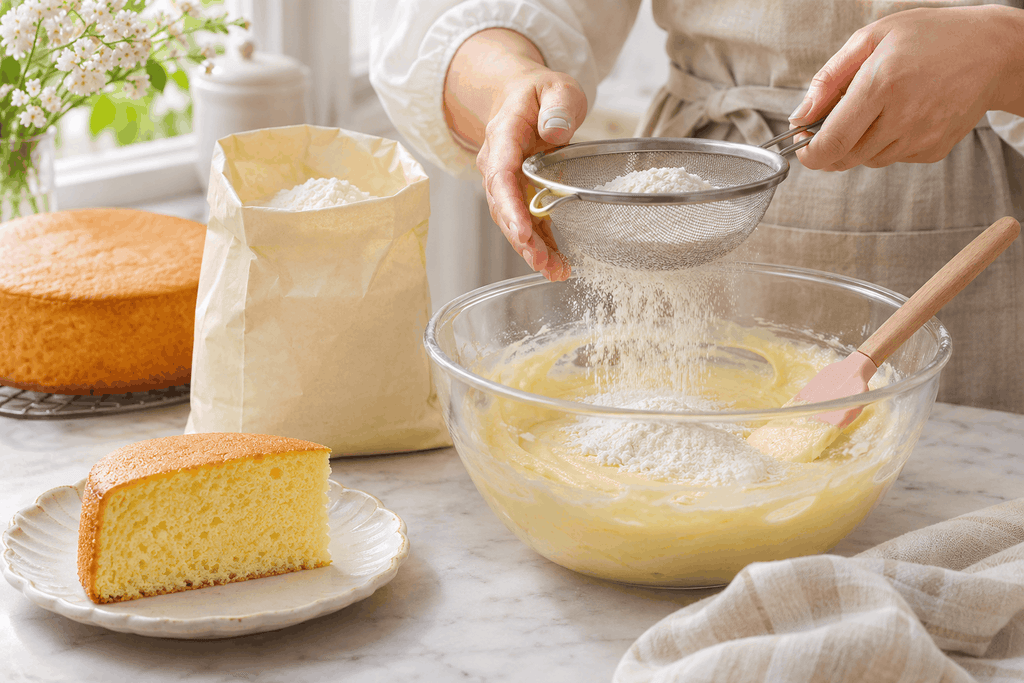
1. Start with Protein and Gluten Formation
Wheat flour contains proteins that can form gluten when hydrated and mixed. Gluten creates a network that contributes elasticity and structure.
Higher-protein flour generally has greater gluten-forming potential. This is useful for many breads, where dough needs strength to retain gas during fermentation.
For tender cakes and biscuits, a less developed gluten network is often desirable. However, flour choice is only part of the picture: mixing, hydration, fat, sugar, and other ingredients also affect the final texture.
2. Understand the Three Main Categories
Use the following as a broad guide rather than a universal classification:
| Flour category | Approximate protein range | Common uses |
|---|---|---|
| Cake flour | About 7–10% | Delicate cakes and some tender cookies |
| All-purpose flour | About 10–12% | Cookies, muffins, everyday cakes, and some breads |
| Bread flour | About 12–14% | Many yeast breads, rolls, and pizza doughs |
Ranges overlap, and products differ between brands and countries. For example, one manufacturer’s cake flour may contain more protein than another’s. Check the actual product information alongside the recipe.
3. Choose Cake Flour for Delicate Textures
Cake flour typically has lower protein and is often finely milled. It is commonly used when the recipe aims for a soft, delicate crumb.
Some sponge cakes, chiffon cakes, cupcakes, and butter cakes are formulated specifically for it. In those recipes, replacing it with a stronger flour can change tenderness and structure.
Nevertheless, not every cake needs cake flour. Many chocolate cakes, carrot cakes, and everyday snack cakes are developed using all-purpose flour.
Follow the recipe’s choice before deciding that a lower protein percentage will automatically improve the result.
4. Use All-Purpose Flour as a Versatile Starting Point
All-purpose flour offers a middle ground between tenderness and strength. It works across a wide range of recipes and is a practical first purchase for occasional bakers.
If you mainly bake muffins, brownies, drop cookies, and simple cakes, many suitable recipes will use it.
In some markets, a comparable product is called “plain flour,” although its protein content can vary. Read the package rather than assuming every product with a similar name performs identically.
Choose recipes developed for the flour you can readily obtain. This reduces unnecessary substitutions while you learn.
5. Choose Bread Flour When Dough Needs More Strength
Bread flour’s higher protein content can support a stronger gluten network and a chewier texture. It is frequently used in yeast breads, pizza doughs, and certain rolls.
It also often absorbs more water than all-purpose flour. Substituting it without considering hydration may produce dough that feels firmer.
However, bread flour is not essential for every loaf. Many sandwich breads and other yeast breads are successfully made with all-purpose flour when the recipe is designed for it.
Likewise, “quick breads” such as banana bread usually follow cake-like mixing methods and do not automatically require bread flour.
6. Select Cookie Flour According to the Intended Texture
Cookies do not all need the same flour.
All-purpose flour is a common choice for chocolate chip, oatmeal, and many everyday cookies. Lower-protein flour may be used in recipes seeking a particularly delicate texture, while some chewy-cookie recipes deliberately include bread flour.
Flour also influences how the dough behaves alongside butter, sugar, eggs, and chilling. Switching to cake flour does not guarantee a crisp cookie, and using bread flour does not guarantee chewiness.
For your first batch, follow the specified flour and assess the cooled result before making changes.

7. Read Beyond the Product Name
Check whether the flour is cake, pastry, all-purpose, bread, whole-wheat, or self-raising. These descriptions convey different information.
Pastry flour often sits between cake flour and all-purpose flour in protein content. Whole-wheat flour includes bran and germ, so it behaves differently from refined white flour even when protein percentages are similar.
Self-raising flour contains added raising agents and, depending on the market, may also contain salt. It should not replace plain flour without adjusting the recipe.
Terms such as “organic,” “unbleached,” or “finely milled” do not, by themselves, tell you the flour’s strength.
8. Approach Substitutions Carefully
If you do not have the specified flour, first look for a tested substitution from the recipe’s publisher—or choose a recipe using what you already own.
Replacing part of all-purpose flour with cornstarch can lower the mixture’s overall protein proportion, but it does not reproduce every property of commercial cake flour.
Similarly, mixing cake flour and bread flour may produce an intermediate protein percentage without making the blend identical to a particular all-purpose flour.
When substituting, weigh ingredients and change one variable at a time. Expect possible differences in absorption, texture, and handling.
9. Build Your Flour Collection Around Your Baking Habits
You do not need every flour type immediately.
Begin with all-purpose flour if your chosen recipes use it. Add cake flour when you regularly make cakes that specify it, and bread flour when bread or pizza becomes a frequent project.
Buy quantities you can use while fresh. Store flour in a clean, airtight container in a cool, dry place, retaining its label and date information.
Keeping notes about the brand and type used can help you repeat successful results.
10. Frequently Asked Questions
Is higher-protein flour better quality?
Protein content describes a useful characteristic, not a universal quality ranking. The right choice depends on the recipe.
Can I make cake with all-purpose flour?
Yes. Choose a cake recipe developed for it.
Do all cookies need cake flour?
No. All-purpose flour is common, and some recipes use other types for specific textures.
Can I make bread without bread flour?
Yes. Many recipes use all-purpose flour successfully.
What should I check first when choosing flour?
Start with the recipe’s specified type, then check the product’s characteristics and intended uses. Treat protein ranges as guidance rather than rigid rules.