Your first baking project should give you something enjoyable to make and a useful skill to practise. You do not need elaborate decorations or a complicated recipe to produce a satisfying result.
Cookies, muffins, and pound cake are all worth exploring, but their difficulty depends on the mixing method and preparation involved. Learning to recognise those differences helps you choose a recipe that matches your equipment, time, and experience.
1. Judge the Method, Not Just the Dessert’s Name
A short ingredient list does not always mean an easy recipe. A dessert made with eggs, sugar, and flour may still require precise whipping and delicate folding.
Before choosing a recipe, check whether it involves:
- Mixing ingredients by hand.
- Creaming butter and sugar.
- Separating and whipping eggs.
- Chilling, rolling, or shaping dough.
- Preparing several fillings or decorations.
For your first attempt, choose a recipe with clear instructions, straightforward preparation, and visible clues for doneness.
2. Start with Simple Drop Cookies
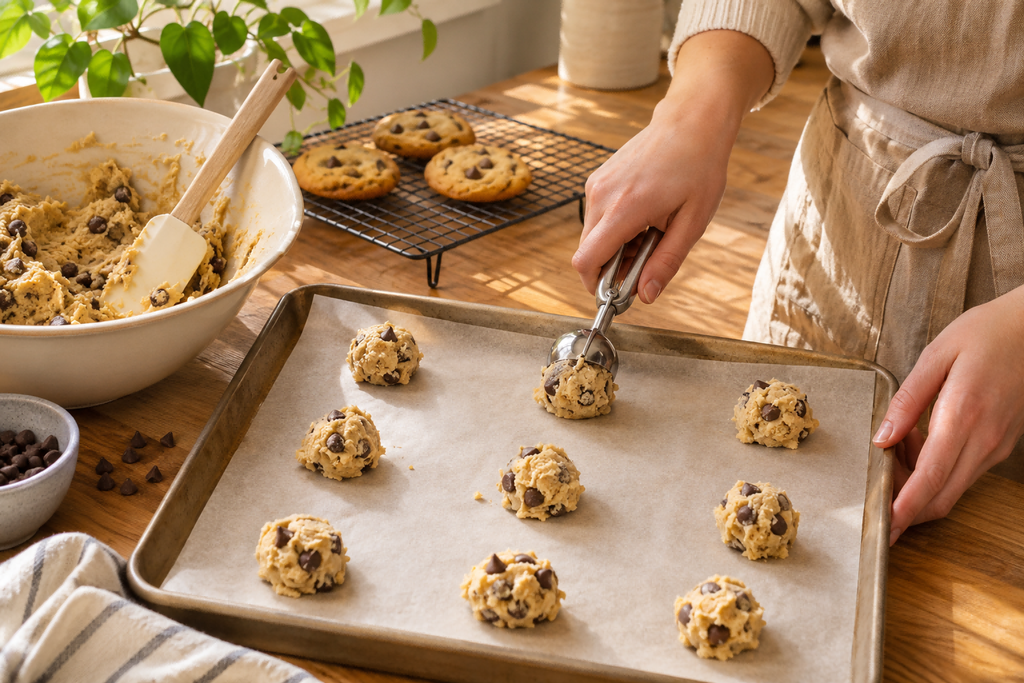
Drop cookies are portioned onto a baking sheet with a spoon or scoop. Chocolate chip and oatmeal cookies are familiar examples, although individual recipes vary.
They introduce several useful habits: measuring ingredients, making evenly sized portions, spacing dough, and watching how cookies change in the oven.
Choose a recipe without fillings, intricate shaping, or multiple doughs. Check whether chilling is required before you begin, and allow time for it.
Follow the specified butter preparation carefully. Melted butter and softened butter behave differently, and changing sugars can also affect texture and spread.
3. Try Shortbread When You Want to Practise Shaping
Shortbread can be a good introduction to handling dough, especially when the recipe presses it directly into a pan.
A traditional mixture relies on butter, sugar, and flour. The challenge is bringing it together and shaping it evenly without excessive handling.
For a first batch, choose a pressed-pan version rather than detailed cut-out shapes. Follow the recipe’s instructions for scoring, cutting, and cooling.
Shortbread also teaches patience: biscuits that feel fragile while warm may become firmer as they cool. Judge the finished texture at the stage the recipe recommends.
4. Choose Muffins to Learn Gentle Mixing
Muffins made with oil or melted butter are often approachable because they usually need bowls, a whisk, and a spatula rather than an electric mixer.
The common muffin method combines dry ingredients separately from wet ingredients, then brings them together with brief, gentle mixing.
Once the flour is moistened and no dry pockets remain, stop as directed. Trying to make the batter completely smooth can lead to tough muffins or an uneven interior.
Start with plain, vanilla, or chocolate chip muffins. Filled centres, crumble toppings, and several add-ins introduce extra steps that can wait.
5. Use Brownies to Practise Judging Doneness
A straightforward brownie recipe is another useful early project. Many versions use melted butter and can be mixed by hand.
Brownies teach you to prepare a pan, spread batter evenly, and recognise the difference between a set edge and a centre that still needs baking.
Read the recipe’s doneness instructions carefully. Fudgy brownies and cakey brownies have different intended textures, so a completely clean toothpick is not a universal target.
Allow the brownies to cool before cutting unless the recipe says otherwise. Cooling helps them set and makes portions easier to handle.
6. Move to Pound Cake for Creaming Practice
Pound cake looks simple, but a traditional creamed version demands more attention than many hand-mixed muffins.
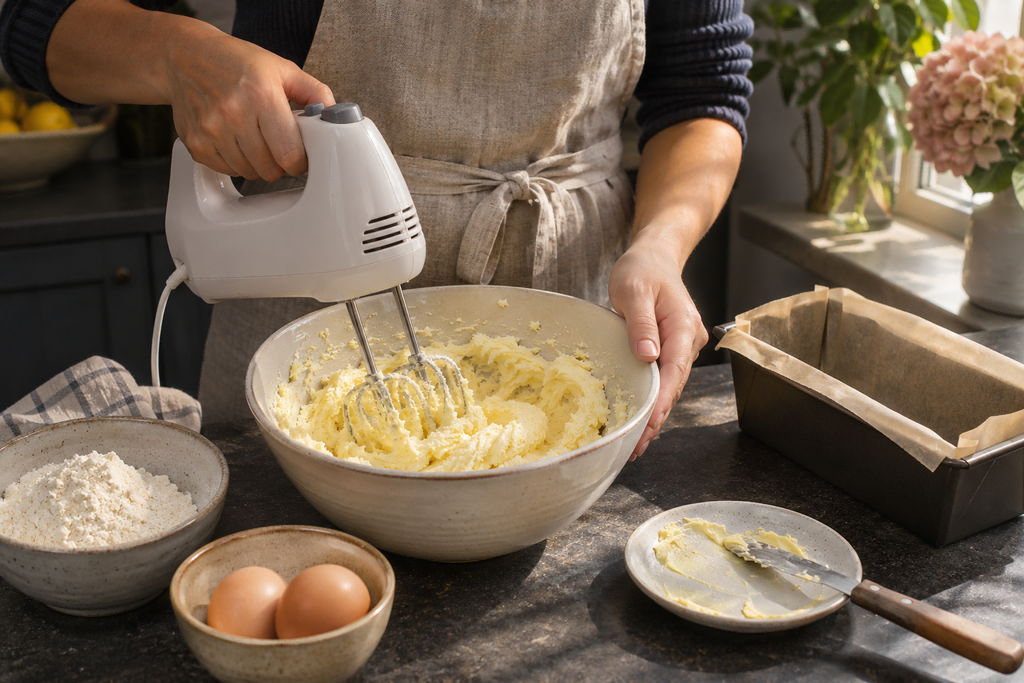
Creaming butter and sugar incorporates air into the mixture. Butter consistency, mixing, and the gradual addition of eggs all influence the batter.
Choose a recipe that describes the expected appearance at each stage. Scrape down the bowl so ingredients combine evenly, and follow the instructions for adding eggs and flour.
More beating is not automatically better. Incorrect creaming can contribute to a dense or uneven cake.
7. Recognise That Not Every Loaf Cake Is Pound Cake
A banana bread and a pound cake may use the same shaped pan while requiring different techniques.
Many banana breads use a quick mixing method similar to muffins. A traditional pound cake usually begins with creaming butter and sugar.
The pan shape tells you little about the difficulty. Read the method before deciding whether a loaf cake is suitable for your next practice session.
Use the specified pan size and the recipe’s doneness checks. A browned surface alone does not confirm that the centre is baked.
8. Compare Recipes by the Skill You Want to Learn
These difficulty levels are a practical starting guide; the exact recipe matters more than the category.
| Dessert | Typical challenge | Skill to practise |
|---|---|---|
| Simple drop cookies | Portioning and controlling spread | Consistent sizing and baking |
| Pressed-pan shortbread | Even shaping | Gentle dough handling |
| Muffins using oil or melted butter | Avoiding excessive mixing | Knowing when to stop |
| Simple brownies | Judging the centre | Reading doneness cues |
| Creamed pound cake | Butter preparation and aeration | Controlled mixing |
Choose one main skill at a time. A familiar flavour with a new technique is often easier to assess than a completely unfamiliar dessert.
9. Repeat a Recipe Before Making Several Changes
A useful practice sequence is muffins, drop cookies, brownies or shortbread, and then a creamed pound cake. Adjust the order to suit what you enjoy eating.
Repeat a successful recipe before changing ingredients or adding decoration. Keep brief notes about preparation, baking time, and the cooled result.
On your first attempt, follow the quantities and method closely. Reducing sugar, swapping flour, changing the pan, and altering the temperature together makes it difficult to understand why the result changed.
10. Frequently Asked Questions
Which dessert is easiest for a complete beginner?
A clearly written, hand-mixed muffin recipe or simple drop-cookie recipe is a useful starting point.
Do I need an electric mixer?
Many muffins, brownies, and cookies can be mixed by hand. Creamed pound cake is generally easier with an electric mixer.
Are all cookies easy to make?
No. Rolled, filled, piped, and sandwich cookies may involve considerably more preparation than drop cookies.
Should I decorate my first cake?
Keep decoration simple so you can focus on mixing and baking. A light dusting of icing sugar may be enough.
What should I do if a batch fails?
Compare your measurements, ingredient preparation, pan, mixing, and doneness checks with the recipe. Change one likely cause at a time when trying again.